
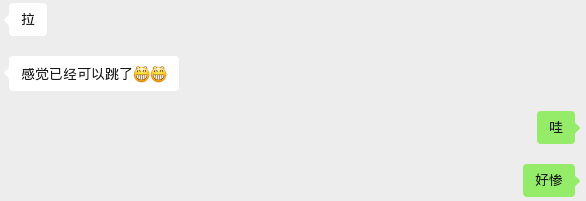
I used to think that I was a very comforting person.
When my friends are sad, I can always say something. Say a few jokes, explain some reasoning, accompany him to review things from beginning to end, and then remain silent at the appropriate time. After many times, I gradually developed a misconception: it seemed that as long as I was patient enough, I would gradually ease the sadness of others.
On the day of the high school entrance examination, I inquired about the scores everywhere and saw a screenshot of the results. The few lines of numbers lay quietly on the screen, without any tone or expression, everything was clear to the point of almost cruelty.
I was thinking about what my teacher used to say: 'The middle school entrance exam is not the only way out', typing it in the dialogue box and hastily deleting it. I am well aware that the role of the middle school entrance examination is to graduate and divert students, and to use these cold numbers to determine your future path. Faced with these cold numbers, even if the heart is warm, it is useless. At that moment, I realized that some words were not something I couldn't say, but something I didn't even believe myself after saying them.
I hesitated for a long time, and in the end, all I could say was' so miserable '.
That day, I lay on the sleeper of the high-speed train and remembered many people I had comforted before.
Once there was a bro who said he had lost his love and sent me a long string of messages in the middle of the night, telling me that he would never like someone again. I stayed up late chatting with him, cursing with him, analyzing with him, and breaking down that relationship into pieces until early morning. The next day, as if nothing had happened, he was already able to joke about his past.
At that time, I thought what I said was useful.
Now thinking about it, maybe it's not what I said that's useful. What he wants is not comfort. That relationship hasn't been heavy enough to crush him, it's just missing a step.
His sadness is certainly true, but there are still gaps in that sadness. Wind energy blows in, time can walk in, and new expectations can slowly come in.
But the grades are not like that.
There is no gap in grades.
It doesn't step back just because you're upset, nor does it change a point just because others feel sorry for you. Those numbers are like dried ink, falling there and can no longer be erased.
I suddenly feel that all gentle words become light in front of it. It's not insincere, it's just too light. It was so light that it had not yet fallen into the other person's heart when it was already blocked back by those few lines of numbers.
But I also don't want to say that comfort is completely meaningless.
Having someone by one's side during the most difficult times is better than having no one at all. Someone who is willing to listen to you say the same sentence many times, is willing to remain silent with you, and is willing not to rush to persuade you to "open up" is itself a small form of support.
Just this kind of support cannot change what has already happened.
It can prevent a person from completely falling down at that moment, but it cannot restore what has fallen back to its original position.
Later on, I discovered that many seemingly powerful things are actually just support after the fact.
The window outside the high-speed train was pitch black that day, driving alone in the suburbs.
I turned over and suddenly thought, 'It's not just about comfort, is it?'. Apologize, compensate, punish… people always seem to hastily reach out their hands after something has happened. What can a outstretched hand catch? Can something that has already been broken be reassembled with a simple "I'm sorry"? Can it be restored to its original state by a judgment?
As I was thinking about it, a news message popped up on my phone screen: The mayor of a certain city has embezzled billions and has been sentenced to death. The comment section is filled with 'great joy'.
I stared at those four words for a long time, but a very inappropriate thought came to my mind – the death penalty is actually as powerless as comfort.
These two words were originally far apart. A clumsy sentence like a late night chat box, and a cold and hard result like a verdict. But what they are facing seems to be the same thing: irreversible damage that has already occurred.
Comfort comes too late, and so does the death penalty.
If a person is sentenced to death for corruption, bribery, or wrongdoing, people may perceive it as a form of retribution. The things he swallowed and the people he stepped on finally received an echo at some point. That kind of death is at least like a period. Although it's late, it seems like it can still make people say: it's time to end here.
The death of a murderer is different.
Because in such a case, what we most want to see is never the death of another person.
What we really want is that the person who was killed did not die.
He can still go home for dinner, answer the phone, and come in on a regular afternoon with a very ordinary sentence.
The death penalty can silence the murderer, file the case, and finally bring a result to the news headlines.
But it cannot make the empty space sit down again, cannot make the avatar in the phone that will never light up again jump, and cannot make the family suddenly stop waking up on a certain night.
It is certainly heavy. Being heavy does not mean being complete.
Some injuries cannot be offset by another death. Death and death do not subtract like numbers.
In "The Void Cross," Keigo Higashino wrote about a pediatrician who, in her youth, strangled her newborn child to death with her lover and saved her life to atone for her sins. However, the female protagonist Sayako insisted that no matter how long had passed, they should still surrender and accept legal punishment. And did everything really end after the murderer of their daughter was sentenced to death in the second trial?
Perhaps' nothingness' is here.
The cross is still there, its weight is still there, but it doesn't have a truly reachable endpoint. It can only be carried and cannot be repaid
I looked at that screenshot of my grades that day for a long time.
In the end, I didn't post 'it's okay' or 'it will get better in the future'. What lingered on the screen was still the dry 'so miserable' sentence from before.
But those two words were probably all I could pull out at that time. It sounds silly and not gentle, as if it has left the other person hanging in place.
It cannot change scores, cannot change preferences, cannot let that afternoon start over.
But perhaps it is precisely because it cannot change anything that it is honest enough – honest enough not to turn around, not to paint this collapsed house with beautiful words.
But I also thought that perhaps when faced with irreversible things, people have very little to offer.
Comfort is powerless.
The death penalty is also applicable.
They all stood after the incident and extended their hands slowly.
Sometimes that hand can't grab anything back, it only proves that even after everything has become unchangeable, we still haven't been willing to turn around and leave.